


What Is rPET? The Complete Guide to Recycled Polyester for Backpacks
As sustainability becomes a global priority, sourcing managers, designers, and brand buyers are increasingly turning to rPET—recycled polyester made from post-consumer plastic bottles. For backpack manufacturers, rPET offers a rare combination of strength, stability, and environmental responsibility.
As a backpack factory with GRS certification, we work extensively with rPET fabrics ranging from 300D to 1200D. This guide explains what rPET is, how it is produced, and why brands across outdoor, lifestyle, and school bag categories are adopting it.
What Is rPET?
rPET (Recycled Polyethylene Terephthalate) is a type of polyester produced from recycled plastic—primarily used water bottles, food containers, and industrial PET waste. Instead of extracting new petroleum, rPET transforms existing PET plastic into usable textile fibers.
In simple terms, rPET is polyester made sustainably. It provides the same performance as traditional polyester but uses significantly fewer natural resources.
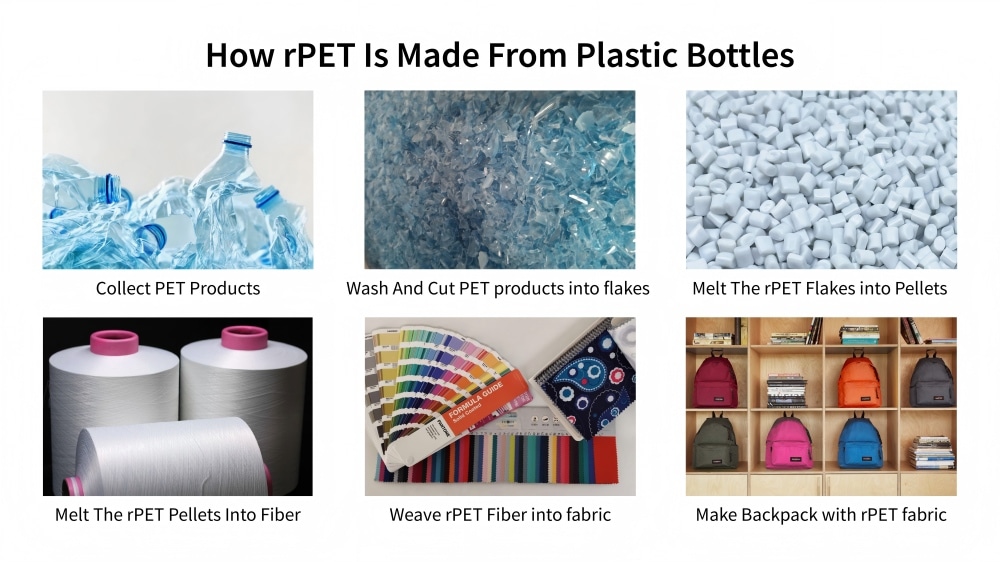
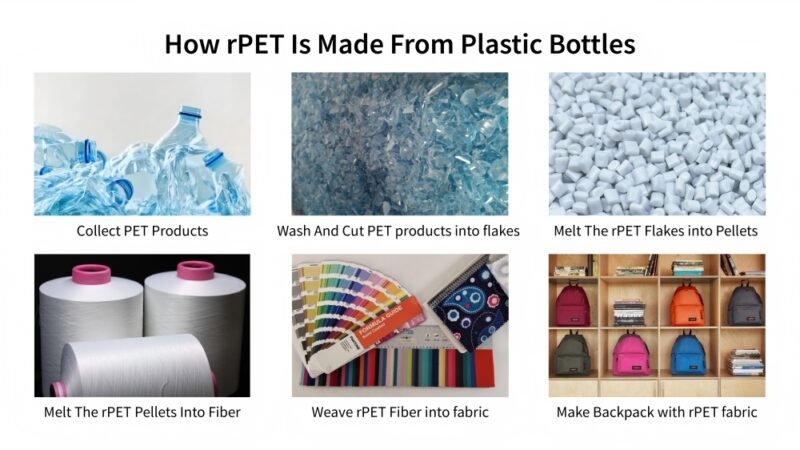
How rPET Is Made: A Simple Breakdown
While the detailed technical process will be covered in the next article of this series, here is a practical overview:
- Step 1 — Collection: Used PET bottles are collected and sorted.
- Step 2 — Cleaning: Bottles are washed to remove labels, glue, and residues.
- Step 3 — Shredding: Clean bottles are cut into PET flakes.
- Step 4 — Reprocessing: Flakes are melted and extruded into recycled yarn.
- Step 5 — Weaving/Knitting: Yarn is woven into rPET fabrics used for backpacks.
The result is a stable, strong, and environmentally friendly polyester yarn suitable for both basic and premium bag constructions.
Why rPET Matters for Backpack Manufacturing
1. Strong Environmental Impact
Producing rPET can reduce energy consumption by up to 45–60% compared to virgin polyester, and it significantly lowers greenhouse gas emissions. Each 1 kilogram of rPET yarn keeps approximately 60 plastic bottles out of landfills and oceans.
2. Excellent Durability
rPET retains the same mechanical properties as virgin polyester—tear strength, abrasion resistance, and dimensional stability remain reliable for everyday bags, outdoor packs, and school backpacks.
3. Growing Consumer Demand
Sustainability is no longer optional. Surveys from major markets show strong consumer preference for products made from recycled materials. rPET gives brands a marketable environmental advantage.
Factory Perspective: Why We Use rPET
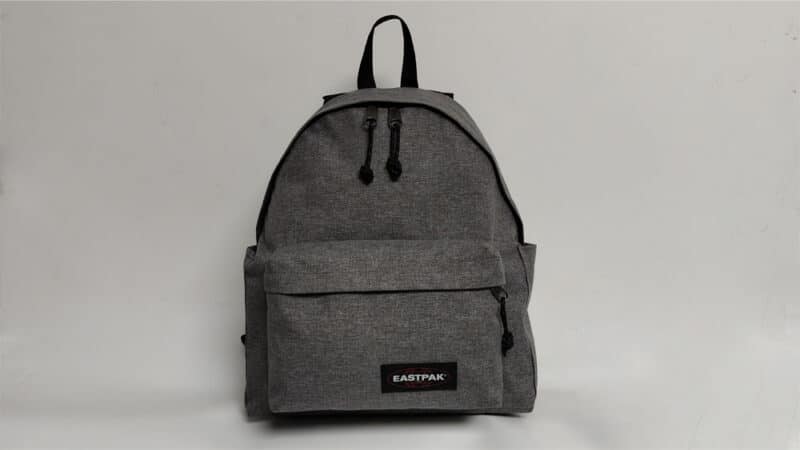
As a Chinese backpack manufacturer, our reasons for adopting rPET include:
- GRS-certified supply chain ensures traceability
- Stable sourcing from mills offering 300D, 600D, 900D, and 1200D rPET
- Consistent dyeing quality and colorfastness on modern lines
- Ability to issue Transaction Certificates (TC) for brand compliance
- Lower MOQ options suitable for new product development
rPET is now one of our most recommended materials for brands launching eco-friendly collections or upgrading their sustainability profile.
Most Common rPET Fabrics for Backpacks
Typical rPET materials we supply include:
| Material | Common Use | Properties |
|---|---|---|
| rPET 300D | Light daypacks, school bags | Lightweight, smooth handfeel |
| rPET 600D | Everyday backpacks & travel bags | Balanced durability & cost |
| rPET 900D / 1200D | Outdoor packs, heavy-duty bags | High tear strength & abrasion resistance |
Quick Comparison: rPET vs Virgin Polyester
| Feature | rPET | Virgin Polyester |
|---|---|---|
| Environmental Impact | Low (recycled) | High (petroleum-based) |
| Strength | Comparable | High |
| Price | Slightly higher | Stable & low |
| Brand Value | Strong ESG advantage | Limited styling benefit |
FAQ
Is rPET durable enough for backpacks?
Yes. rPET provides the same tear strength, abrasion resistance, and dimensional stability as virgin polyester.
Is rPET more expensive?
Typically 10–20% more, depending on yarn count, dyeing method, and certification (such as GRS).
Can you provide GRS certificates?
Yes, we can issue Transaction Certificates (TC) for all rPET orders upon request.